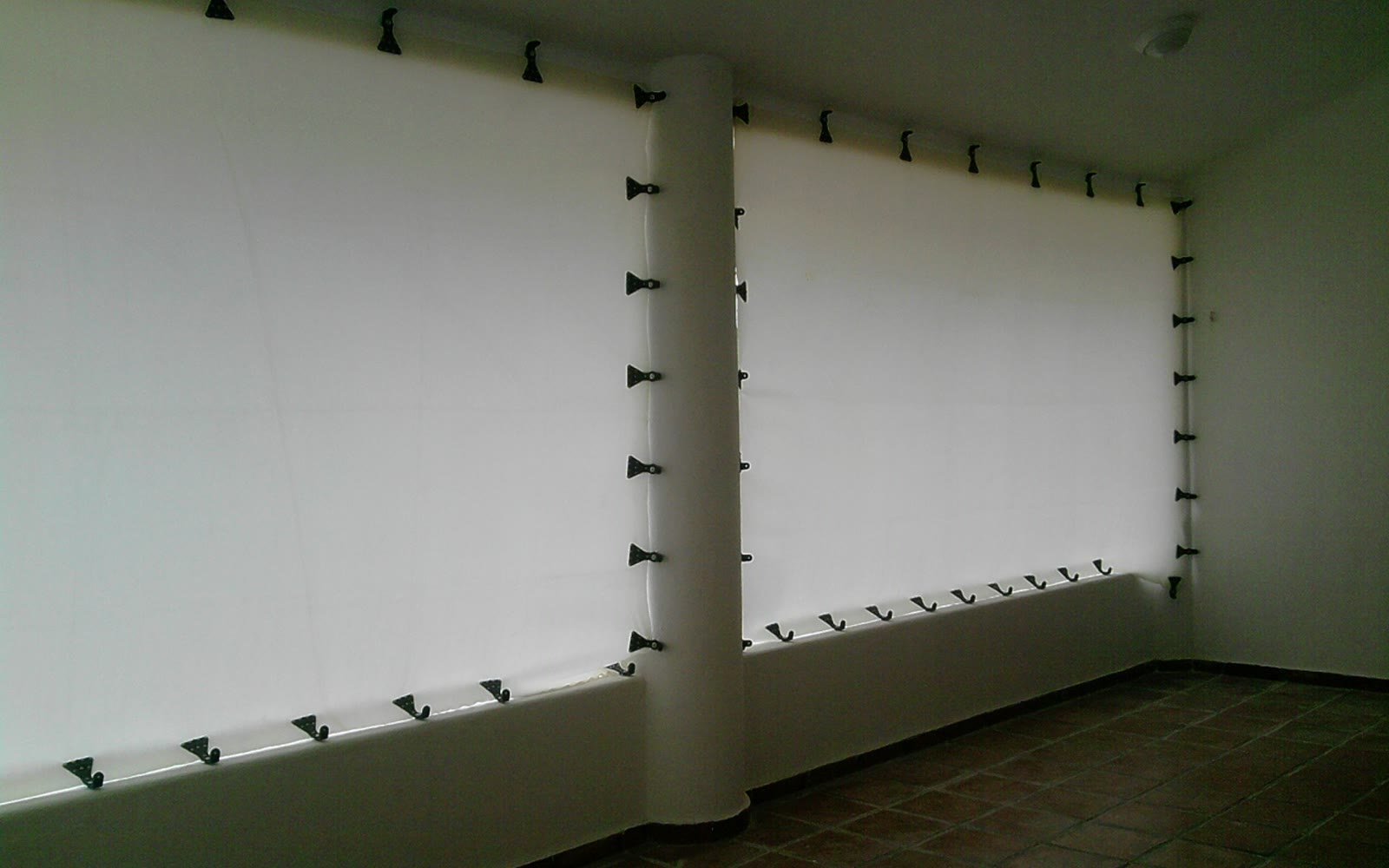
PSF stands for pounds per square foot. Structural engineers use it to measure how much wind force a protection system can take without failing. A system certified to ±80 PSF, like AstroFlex, has been evaluated and sealed by a licensed engineer for that specific load. Once you understand the number, you can compare any system with confidence.
PSF in Plain Terms
When wind hits a window, a door, or a storm panel, it pushes on the whole surface. That force is measured in PSF. The higher the rating a system can resist, the more wind load it can carry without structural failure.
The ± sign means the system was tested for positive pressure (wind pushing toward the building) and negative pressure (suction pulling outward). Both happen in a hurricane, because wind direction shifts as the storm passes over a site.
Keep in mind that PSF is not wind speed. It is force spread over a surface, and it also depends on building geometry, height, and local exposure, following the ASCE methodology used in hurricane engineering.
How a Product's PSF Rating Is Determined
In a certified system, PSF is not a marketing number. It comes from physical lab testing and structural calculations sealed by a licensed professional, under the TAS 201, 202, and 203 protocols of the Florida Building Code. For AstroFlex, Fenestration Testing Laboratory, Inc. (Lab No. 5777) ran the tests, and John H. Kampmann Jr., PE, sealed the engineering.
Testing includes repeated load cycles that simulate sustained gusts, plus a maximum static load. So the final rating reflects how well the system holds together under prolonged severe wind, not just one strong gust. That chain of testing, engineering, and regulatory review is part of what separates a certified system from an unverified one. This related piece breaks it down further.
Does the Required PSF Change Across the Facade?
Yes. Building corners and edges usually take more concentrated loads than the middle of a facade, because of aerodynamic turbulence at the edges. On complex installations or taller buildings, an engineer may specify different anchoring, or even different systems, by zone. That is why project-specific sealed engineering matters as much as the product's generic number.
Height and Exposure Category
Wind speed generally rises with height because there is less ground friction. An identical opening on a second or third floor can see more effective pressure than one at ground level, and project engineering has to account for it.
ASCE standards also sort terrain into exposure categories, from open country to dense urban areas. A beachfront property, with open water ahead and nothing to slow the wind, typically falls into the most demanding scenario. It deserves extra attention when you design the protection.
How to Compare PSF Across Systems
Before deciding one system is "stronger" because its PSF is higher, confirm that both were tested under equivalent protocols. A high number from a looser protocol can't be compared with a lower number from a stricter one. This table shows how to read each case:
| Situation | What the PSF number means |
|---|---|
| Certified system (for example, AstroFlex) | Lab testing, sealed engineering, and official approval |
| System with no verifiable certification | Claimed by the manufacturer, with no independent validation |
| PSF from a different or unspecified protocol | Direct comparison with other systems can mislead unless the protocols match |
| Local minimum requirement vs. product PSF | Related but different figures; confirm both |
| Upper-floor opening vs. ground floor | Effective pressure generally increases with height |
| Open coastal terrain | The most demanding scenario for effective pressure |
Local Requirements and Engineering Drawings
A product's certified PSF comes from the manufacturer. The minimum requirement for your building comes from local code, which in Mexico can vary by municipality or state. Ask a local architect or civil engineer before assuming any certified PSF is enough for your location.
On certified drawings, PSF never appears alone. It comes with anchor-spacing tables based on opening span and substrate type, so the rating turns into specific installation instructions for each configuration.
What to Ask Any Supplier
- What is the certified PSF?
- Which test protocol set it?
- Which lab ran the tests, and can I review the full report?
- Does my property's exposure zone carry any limitation?
These four questions give you a solid technical footing to evaluate any system, beyond the bare figure in the sales material. Once your requirements are clear, request a quote and an advisor will review your case. For another angle, see what separates certified from uncertified hurricane protection.
Frequently Asked Questions
Is a higher PSF always better?
Generally it signals more wind resistance, but it depends on whether your property actually needs that level given its exposure and location.
How do I verify a product's real PSF?
Find the official approval number (FL15186 for AstroFlex) and confirm the PSF at that source.
Can I compare PSF between two manufacturers directly?
Only if both were tested under equivalent protocols. Otherwise the comparison can mislead.
Should I ask for the full test report?
Yes. The report lets you check the protocol and the conditions behind the final number.
Is the product's PSF the same as my area's minimum requirement?
Not necessarily. Ask a local professional which minimum applies to your property.
Does my property's height affect the pressure on my windows?
Yes. Wind generally strengthens with height, which can raise effective pressure on upper floors.