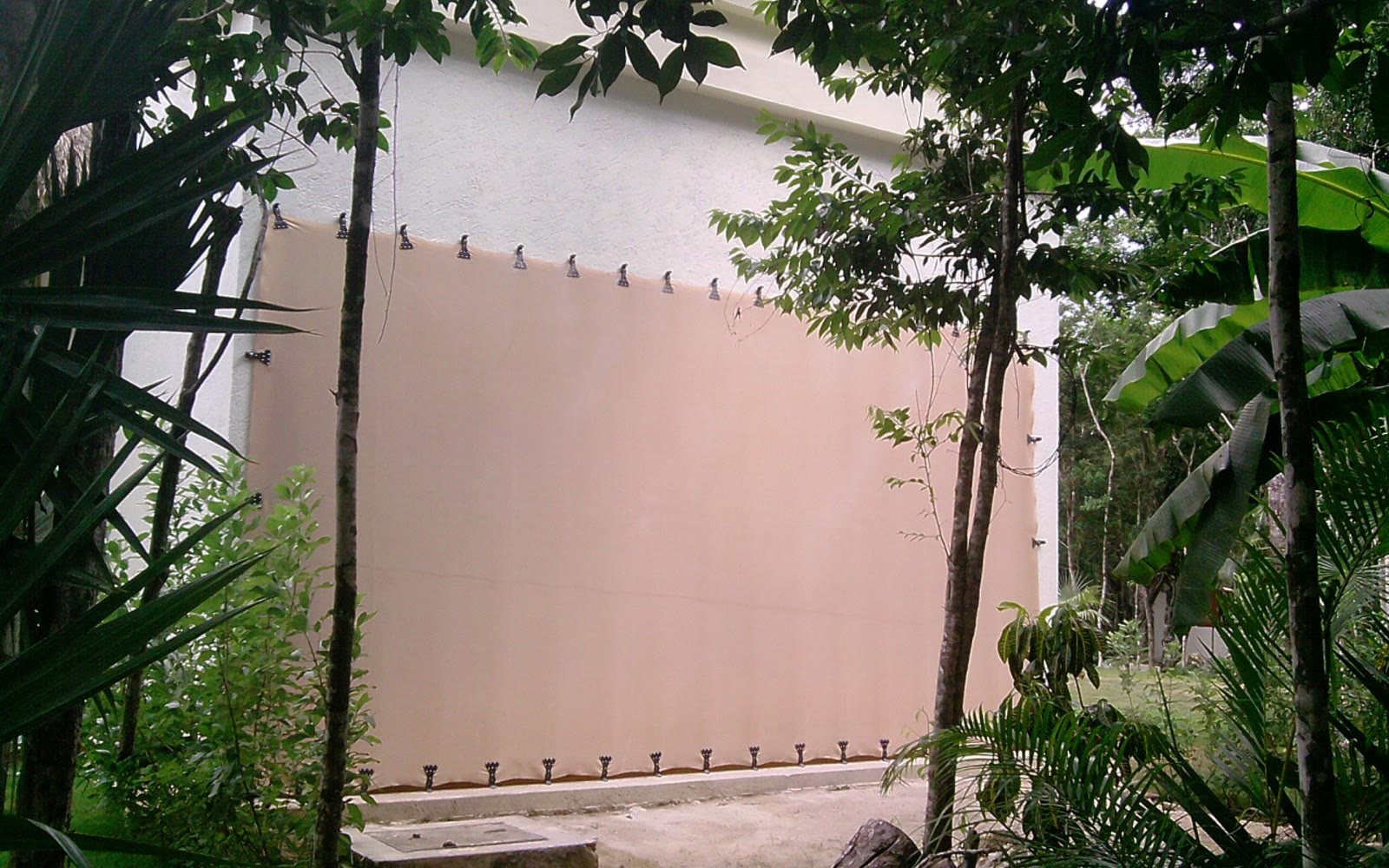
At a boutique hotel, hurricane protection investment isn't calculated by room count — it's calculated by the real surface area of openings: windows, sliding doors, and entries spread across guest rooms, the lobby, the restaurant, and service areas. Understanding what actually drives that scope is the first step toward planning with phases, operational continuity, and technical documentation instead of a generic number.
From Room Count to Square Meters of Building Envelope
Twenty rooms don't add up to a standard scope, because every hotel has different architecture. A hotel with glass-walled balconies can have more protectable area than one with small, interior-facing windows. The lobby, restaurant, offices, spa, service doors, and common areas add to the total scope too.
The survey should code every opening by zone — for example GUEST-101-A, LOBBY-01, REST-03 — which makes both quoting and later operations easier. At a hotel, that measurement document becomes an asset inventory, not just a pricing list.
Prioritize by Consequence of Failure, Not Convenience
Not every opening carries the same consequence. A large lobby window can affect a critical access and operations area; a service opening can compromise equipment; a guest-room door can affect available room inventory. The priority matrix combines area, exposure, the function of the space, and whether a damaged zone can be isolated.
If the project runs in phases, management should be able to explain what capacity stays protected at each stage. The exact sequence varies by property, but the logic behind it should be explicit, not improvised.
Installing With Guests On-Site: the Schedule Is a Project Variable
Installing protection at an operating hotel means coordinating access, noise, security, and sometimes pulling rooms out of inventory temporarily. Those factors affect both schedule and productivity, and a professional proposal should spell out how the work will be sequenced and what conditions the hotel needs to provide, instead of folding them into a generic "hotel project" markup.
Scheduling outside peak-occupancy weeks also lets staff train and work out details before a real emergency. Ready.gov's business continuity guidance stresses planning for communications, response, and recovery; the physical system should be built into that same plan.
The Technical Documentation Behind the Investment
What matters most when comparing proposals isn't marketing language — it's documentation. The system HF México installs is backed by Florida Product Approval FL15186-R7, rated impact-resistant with a design pressure of +80/-80 PSF, verified by professional engineer John H. Kampmann Jr., PE #47516. The approval also carries an important limit: it covers use outside the High-Velocity Hurricane Zone (HVHZ). That detail protects the hotel, because a useful certification spells out both what a system can do and the limits under which it was evaluated.
The evaluated installation is limited to concrete block, poured concrete, and wood-frame structures. Before scope is set, the survey confirms the mounting surface falls within that documented range; when a condition doesn't match, the right move is to review it, not improvise.
How the Investment Is Actually Defined
Hotel protection is priced by square meter of opening, not by room or a flat rate. The budget depends on the total surface to cover, the number of openings, and conditions like irregular shapes, difficult access, or substrate condition, which may call for a technical review before scope is closed. The sound way to move forward is to build a reproducible zone-by-zone inventory first, then request a quote from HF México, where a specialist reviews surface area, substrate, and site conditions before finalizing scope.
On larger projects, a volume discount shouldn't be promised unless confirmed: scale can create efficiencies, but also more coordination, height, or logistics. The proposal should reflect the actual project, not a commercial condition that hasn't been evaluated yet.
The Deployment Protocol Has to Work Across Real Shifts
A hotel runs 24/7 with rotating staff. If only one person knows how to deploy the protection, the system has a single point of operational failure. The project should hand over a written procedure, train more than one shift or role, and define who authorizes deployment and how zones get prioritized when time is short.
Training doesn't need to be a full course: a walkthrough with the inventory, photos, and supervised practice can surface questions that would be costly to discover mid-storm. The goal is for the hotel to act without depending on an outside vendor.
Protection as Part of Hotel Continuity
A hotel can tell guests it has invested in preparedness, but it should avoid promising absolute safety. Internal communication matters more: which areas are protected, which risks remain, which evacuation protocols apply, and how the hotel coordinates with local civil protection authorities. The best investment reduces physical vulnerability and improves organization; if the system is installed but no one knows how to operate it, the project is still incomplete.
Installation Phases: How Scope Gets Prioritized
When a project runs in stages, it helps to set in advance which zones fall into each phase and why. A typical sequence — adjustable to each property — looks like this:
| Phase | Typical Areas | Priority Criterion |
|---|---|---|
| Phase 1 | Lobby, front desk, and critical common access points | Operational continuity and access control |
| Phase 2 | Guest rooms | Available room inventory |
| Phase 3 | Restaurant, spa, offices, and service areas | Secondary spaces and equipment protection |
An Illustrative Scenario: How the Decision Plays Out on a Property
A 24-room boutique hotel identifies 180 m² (1,940 sq ft) of openings across guest rooms, the lobby, the restaurant, and service areas. Management decides to quote by zone and schedules the work during lower-occupancy weeks; the project delivers a coded inventory and a deployment protocol for maintenance and security staff. The budget stops being "price per room" and becomes investment by surface area and function. This is an illustrative scenario — not a testimonial or a promise of damage or savings outcomes.
Connecting to Hurricane Preparedness in Mexico
Opening protection is one layer within hurricane preparedness, not a promise of total immunity. Cyclones combine wind, wind-driven rain, debris, storm surge, and flooding; protecting windows and doors reduces one critical entry path for wind and projectiles, but it doesn't replace decisions about roof, drainage, evacuation, insurance, or flood risk.
CENAPRED and Mexican authorities emphasize advance preparation. Installing opening protection carries more value as part of a calendar: property review, inventory, installation, storage, deployment practice, and tracking official alerts.
Operating Strategy: Before, During, and After the Season
Before the season: check components, fixing points, labels, storage, and who's responsible. During a threat: follow official sources and deploy with enough lead time under the property's protocol. After the event: wait for safe conditions, inspect anchors and components before storing the system, and log any damage or change. Ready.gov recommends building communications, response, and recovery into a business's continuity plan; the physical system should be part of that same plan.
A reactive strategy means learning how the system works while time pressure is already on. A proactive one means practicing it when there's no emergency — and it usually means less improvising, fewer calls, and fewer chances of missing an opening.
If You Could Only Do One Thing
Measure and document every opening before comparing proposals. A verified total surface turns any offer into something comparable on the same basis and forces every provider to justify its scope. The best value isn't necessarily the cheapest option — it's the combination of clear scope, defined installation, and protection backed by verifiable documentation. Learn more about HF México's hotel protection systems before requesting your survey.
Frequently Asked Questions
Is protection priced per room?
Not as the main method. It's priced by opening surface area, and the project is organized by zone.
Is there an automatic volume discount?
It shouldn't be promised without a project quote — scale can create efficiencies, but also more complexity.
How do I avoid disrupting guests?
Plan phases, access, and scheduling together with hotel operations before installation starts.
Who should know how to deploy the system?
More than one person or shift — relying on a single employee is an operational single point of failure.
Does protection replace the hotel's emergency plan?
No. It should be integrated into the hotel's continuity, communications, evacuation, and response plan.
What substrates does the installation cover?
Concrete block, poured concrete, and wood-frame structures; the survey confirms the mounting surface falls within that range.