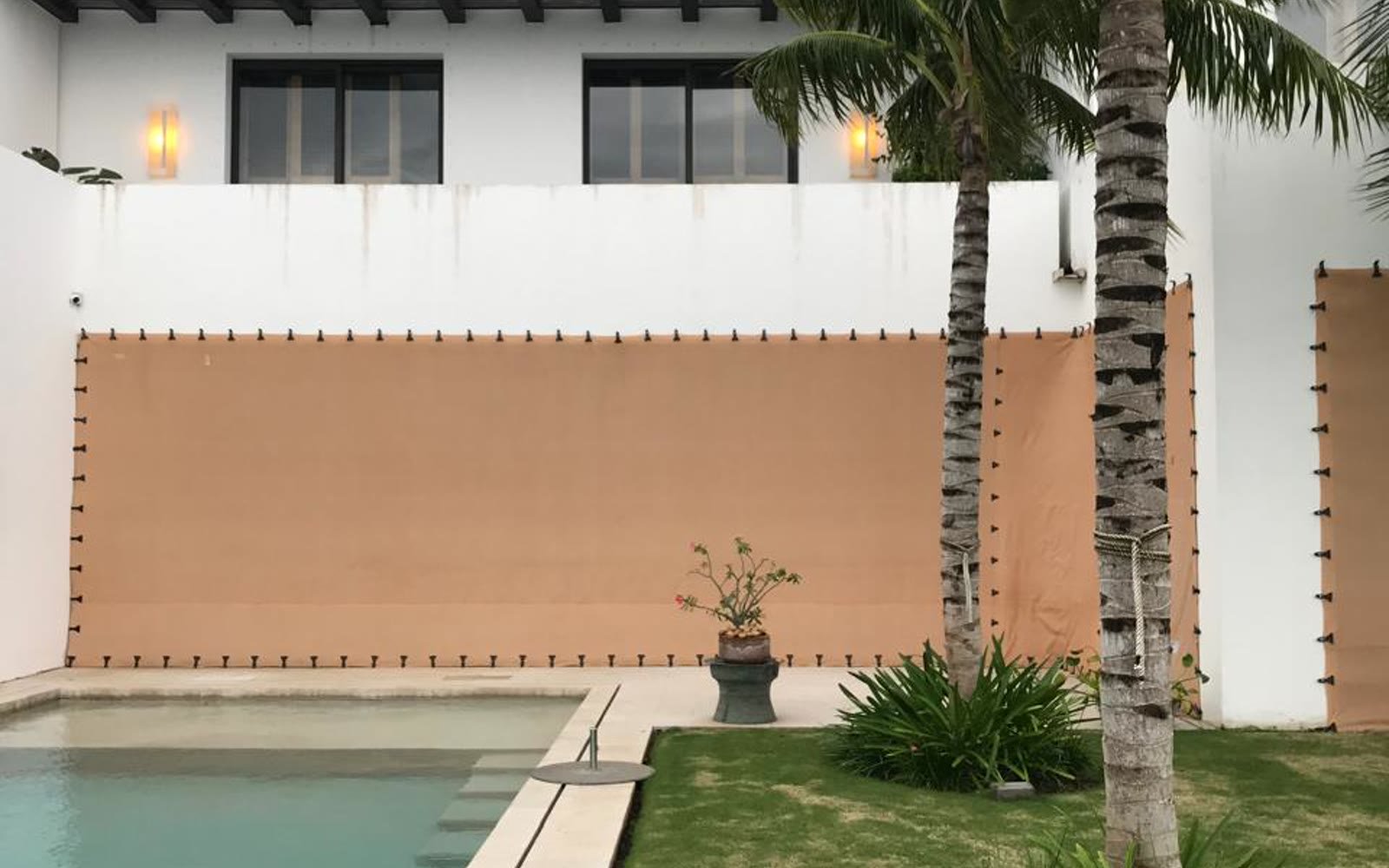
A vacation rental protects its windows and doors under the same logic as a full-time residence: opening surface area sets the scope, not whether the property is listed on Airbnb. What actually changes is management—who decides, who deploys the system, and how everything gets documented when the owner lives hundreds of miles away.
Same Opening Surface, Different Management
A window doesn't know whether the house is a primary residence or a vacation rental; the way the project gets measured stays the same. What changes is who makes decisions and who executes the protocol when the owner isn't in the country. That's why it helps to split the investment into two layers: physical protection for each opening, and the operational capacity to deploy it on time.
A proper survey identifies every opening with a code, measurement, and location. That inventory can go straight to the property manager or maintenance lead, turning the system into a repeatable procedure instead of something that depends on someone remembering which panel goes where.
Occupancy Changes the Calendar, Not the Installation
Installing on a rented property means coordinating around guests: working between bookings, by zone, or during scheduled maintenance. It isn't realistic to assume every vacation rental needs special scheduling—if a property has a real access or calendar requirement, it belongs in writing on the proposal, not assumed by default.
Planning outside of a hurricane watch has another benefit: the property manager can learn the procedure on an empty property and measure real deployment times. That practice cuts improvisation later, when guests, flights, evacuations, and limited staff are all competing for attention at once.
Measuring Impact Without Inventing Numbers
Every property has its own rate, occupancy, and seasonality, so there's no universal "loss per night" figure that applies across the board. What an owner can do is weigh their own downtime, cleaning, repairs, and admin time against the preventive investment, using their actual booking history instead of a generic average.
The goal is reducing one category of vulnerability that can contribute to interior damage and delay reopening. A protected opening doesn't guarantee the property stays operational if there's flooding, a power outage, or regional damage—keeping that distinction clear avoids unrealistic expectations.
The Certification Behind the Decision
What matters most for comparing proposals isn't marketing language—it's technical documentation. The system HF México installs is backed by Florida Product Approval FL15186-R7, rated impact-resistant with a design pressure of +80/-80 PSF, verified by professional engineer John H. Kampmann Jr., PE #47516. The record also spells out a clear limit: the approval covers use outside the High-Velocity Hurricane Zone (HVHZ).
The evaluated installation is limited to concrete block, poured concrete, and wood-frame structures. Before scope is finalized, an on-site survey confirms the mounting surface falls within that documented range; when a condition doesn't match, the right move is to review it, not improvise.
What Actually Drives the Investment
Total opening surface is the starting point, but it isn't the only thing that sets final scope: the shape of each opening, access difficulty, substrate type, and any corrective work outside a standard installation all factor into the equation. None of that gets resolved with a simple multiplication—it gets confirmed with a technical survey.
That's why the responsible way to plan is splitting the process into two steps: a reproducible estimate based on area, and a quote from HF México that confirms real scope before signing off. That separation cuts down on disputes later and lets the investment be weighed against other property priorities.
Who Deploys the System When the Owner Isn't There
In an owner-occupied home, responsibility is usually obvious. On a vacation rental, it can fall to the property manager, maintenance staff, security, or an outside vendor. That responsibility needs to be defined in writing before the season starts, with access to storage, keys, an opening list, and clear criteria for activating the protocol.
It's also worth testing the process. A simple drill reveals mislabeled panels, blocked routes, or missing tools. Ready.gov recommends that businesses build continuity plans ahead of an emergency; a professionally managed vacation rental benefits from the same principle, even if it's a single unit.
Year-Round Aesthetics, Storm-Ready Function
Vacation rental managers tend to care about photos, views, and guest experience. Protection should be evaluated not just on how it performs when deployed, but on how it lives with the architecture when it's stored: anchor points, storage location, and the mounting procedure all factor into that decision.
A system that's hard to install can end up getting postponed by a manager working with limited staff. The best solution pairs technical backing with an operation the property can actually run.
Turning Protection Into an Operating Asset
Keep the system's file alongside the property manual: drawings, opening inventory, photos, certification documents, instructions, and contacts. If the property manager changes, that package should transfer just like utility codes or equipment manuals.
That discipline raises the practical value of the investment: protection stops being a one-time purchase and becomes a process built into the property's risk management.
One Layer of Preparedness, Not a Full Guarantee
Opening protection is one layer within hurricane preparedness, not a promise of total immunity. Cyclones combine wind, wind-driven rain, debris, storm surge, and flooding; protecting windows and doors helps close off one critical entry point for wind and airborne debris, but it doesn't replace decisions about roofing, drainage, evacuation, insurance, or flood risk.
CENAPRED and Mexican authorities emphasize advance preparation. Installing opening protection carries more value as part of a full calendar: property review, inventory, installation, storage, deployment practice, and tracking official alerts.
Before, During, and After the Season
Before the season: check panels, fixing points, labels, storage, and who's responsible. During a threat: follow official sources and deploy with enough lead time per the property's protocol. After the event: wait for safe conditions, inspect anchors and components before storing the system, and log any damage or change. That cycle needs to exist in writing if more than one person is involved.
What to Check by Property Profile
| Property Profile | Main Operational Consideration | What Needs Documenting |
|---|---|---|
| Compact unit, few openings | Fast installation between bookings | Code and location for each panel |
| Mid-size rental, several openings | Coordination with the guest calendar | Deployment lead and key access |
| Villa with larger opening surface | More installation and storage time | Full inventory and a pre-season drill |
| Closure for prep or damage | Operational impact varies by property | Calculate from real history, not a generic average |
If You Could Only Do One Thing
Measure and document every opening before comparing proposals. A verified total surface turns the investment into something reproducible and forces any competing proposal to be compared on the same basis. The best value isn't necessarily the lowest number—it's the combination of clear scope, defined installation, and protection backed by verifiable documentation. Learn more about HF México's residential systems before requesting your survey.
Frequently Asked Questions
Does the investment change if the house is listed on Airbnb?
Not because it's rented out—opening surface stays the basis for the estimate. Specific operational conditions, like access windows, should be documented in the proposal.
Who should deploy the protection?
Whoever is named in the property's operational plan, with access, an inventory, and prior training.
Can I factor in lost rental nights?
Yes, using your own revenue and occupancy. Avoid a universal figure that doesn't reflect how your specific property actually performs.
Does protection guarantee I won't have to cancel guests?
No. A hurricane can cause power outages, flooding, evacuations, and regional damage even with openings protected.
How do I reduce deployment errors?
Label every opening, store panels by code, and run a deployment drill before the season starts.
What documents should the property manager keep?
Opening inventory, instructions, technical certification, contacts, and any installation-specific conditions.