Why Planning Ahead of the Season Improves the Decision
When an owner waits until a storm is already in the forecast, two separate decisions collapse into one: how much surface area to protect, and which system to install. Planning ahead keeps those questions apart — scope first, technical solution second. The advantage isn't a seasonal discount; it's time to measure, compare documentation, and schedule installation without the pressure of an active watch.
CENAPRED confirmed that Mexico's 2026 hurricane season opens May 15 on the Pacific coast and June 1 on the Atlantic and Caribbean side. Those dates are a planning deadline, not the ideal start date. If you want opening protection installed and a deployment routine your family or staff already understands, the work has to begin earlier.
The Investment Is Sized by Openings, Not Building Square Footage
A 300-square-meter (3,230-square-foot) house does not automatically need three times the protection of a 100-square-meter home. What drives the scope is the surface area of windows, doors, sliding glass doors, and other glazed openings you plan to cover — not the property's built area. Two homes of identical size can have very different footprints — one with solid walls and small windows, another with large glass walls facing the view — which is why a construction cost-per-square-meter figure is misleading for this project.
The starting point is a simple worksheet listing every opening — width, height, location, and substrate. That list lets you total the real area and decide whether to protect everything at once or in phases before requesting a quote from HF México. A technical site visit still confirms the installation details, but the owner arrives with a clear expectation and can quickly spot whether a proposal is based on the same measurements.
The Documentation Behind the Investment
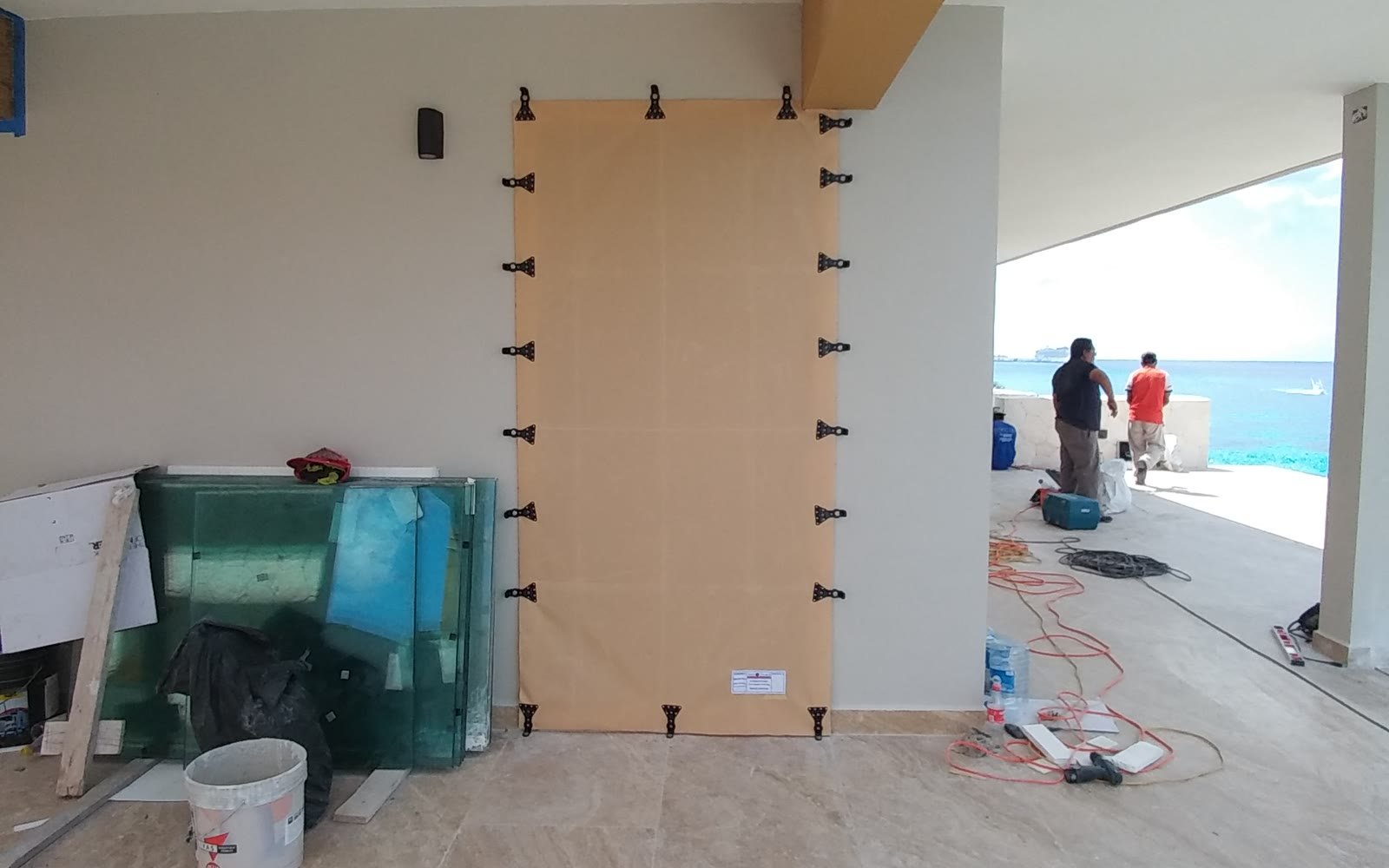
Comparing value, not just area, means reviewing documentation instead of marketing language. The system HF México installs carries Florida Product Approval FL15186-R7, evaluated under the 2023 edition of the Florida Building Code. The listing shows impact resistance, a design pressure of +80/-80 PSF, and engineering verification by John H. Kampmann Jr., PE #47516 — approved for use outside the High Velocity Hurricane Zone (HVHZ). A useful certification states both what a system can do and the limits it was evaluated under.
The evaluated installation is limited to concrete block, poured concrete, and wood-frame construction. Before locking in scope, a site survey confirms the anchoring surface falls within that documented range; when a condition doesn't match, the right move is to review it, not improvise around it.
What Can Move the Investment Beyond the Base Calculation
The area-based calculation assumes a project within standard scope. An irregular opening, hard-to-reach access, a deteriorated surface needing repair before anchoring, or a structural condition that rules out the standard configuration can all change the work involved. Flag those conditions before signing — there's no universal contingency percentage for every property, and any added line item should tie to an observable condition, explained in writing.
It's also worth separating the protection system from general building maintenance. A damaged wall, a loose frame, or waterproofing repairs shouldn't be folded into a generic "hurricane protection" scope. A transparent proposal shows exactly what you're buying, so you're not comparing quotes that actually cover different work.
Planning in Phases Without Losing Sight of the Goal
When protecting every opening at once isn't realistic, phasing the project is reasonable. Priority should be set by exposure and consequence, not by which opening is simplest to handle — large doors, sliding glass walls, and openings on heavily exposed façades usually come first. A partial phase needs to be documented clearly, so nobody mistakes "some openings protected" for "a fully protected envelope."
A simple inventory helps: opening, area, substrate, priority level, and execution phase. That format turns planning into an operating plan and makes it easy to expand coverage later without starting over, because the property already has an organized record.
Service Life, Reuse, and Why Certification Outweighs the Word Itself
polypropylene hurricane fabric is stored between seasons and reused year after year, unlike single-use solutions replaced each time. That reusability, plus the material's service life and manufacturer warranty, is what's worth comparing across proposals — not just the final scope. The best value isn't the smallest proposal; it's a clearly defined area, a defined installation method, and verifiable documentation.
A useful certification isn't the word "certified" — it's an approval number that lets you check design pressure, impact rating, use limits, and installation documentation against an independent source. Anyone requesting protection should be able to ask for specific facts and get back the same level of precision.
Opening Protection Is One Layer, Not a Total Guarantee
Hurricanes combine wind, wind-driven rain, debris, storm surge, and flooding. Protecting windows and doors closes off a critical path for wind and airborne debris, but it doesn't replace decisions about roofing, drainage, evacuation, or insurance. Some insurers recognize installed opening protection; outcomes depend on the individual policy, so it's worth confirming directly with your insurer.
CENAPRED and Mexico's civil protection authorities emphasize early preparation. Installing opening protection carries more value when it's part of a calendar: property review, inventory, installation, storage, a deployment drill, and tracking official alerts.
Before, During, and After the Season
Before the season: check panels, anchor points, labels, storage, and who's responsible. During a threat: follow official sources and deploy with enough lead time under the property's protocol. After the event: wait for safe conditions, inspect anchors and components before storing, and log any damage or change. Practicing the protocol once, without time pressure, cuts down on last-minute calls and the risk of missing an opening when an actual alert is active.
| Way of Planning | Recommendation | What It Means |
|---|---|---|
| By building square footage | Not recommended | Doesn't reflect how many openings the property actually has |
| By opening area | Recommended | Lets you measure a real, comparable surface across proposals |
| Quote with technical site survey | Contracting standard | Confirms substrate, geometry, access, and installed scope |
Frequently Asked Questions
How do I know how much surface area to protect?
Measure the width and height of every window, door, sliding door, and glazed opening you want to cover, then add up the total area. That figure — not the house's built square footage — is the basis for requesting a quote.
Is the area-based calculation already a final quote?
No. It's a planning reference. The technical site survey confirms substrate, geometry, access, and any condition outside standard scope before the work is finalized.
Should I automatically add a contingency percentage?
There's no universal percentage that applies to every property. Any additional line item should be explained by a real condition found during the evaluation.
Should I wait for a hurricane forecast before installing?
No. Planning ahead lets you measure, review documentation, and schedule installation in an orderly way, without depending on an emergency.
Can I protect the property in phases?
Yes, as long as the phases are documented and it's clear which openings remain unprotected until the next stage.
What should I ask for before signing?
Ask for the verifiable approval number, the system's use limitations, and the installation documentation that applies to your property.